BMT-09.01 Executive Summary#
BlueMirror.tech | May 2026#
Carmen Delgado has evaluated nine AI platforms for her network of Area Agencies on Aging. Every one assumed the subscriber owned a specific device. Every one failed when she asked what happens for the seventy-eight-year-old who does not own it, does not want it, or cannot operate it.
BlueMirror’s architecture does not require any specific hardware in the subscriber’s home. The original design assumed a GB10 pair in every home, approximately $10,000 per pair, an untenable cost for a population whose median monthly income is $1,847. The revised architecture replaces that assumption with a three-zone compute model that serves subscribers across a range of hardware situations without degrading the product.
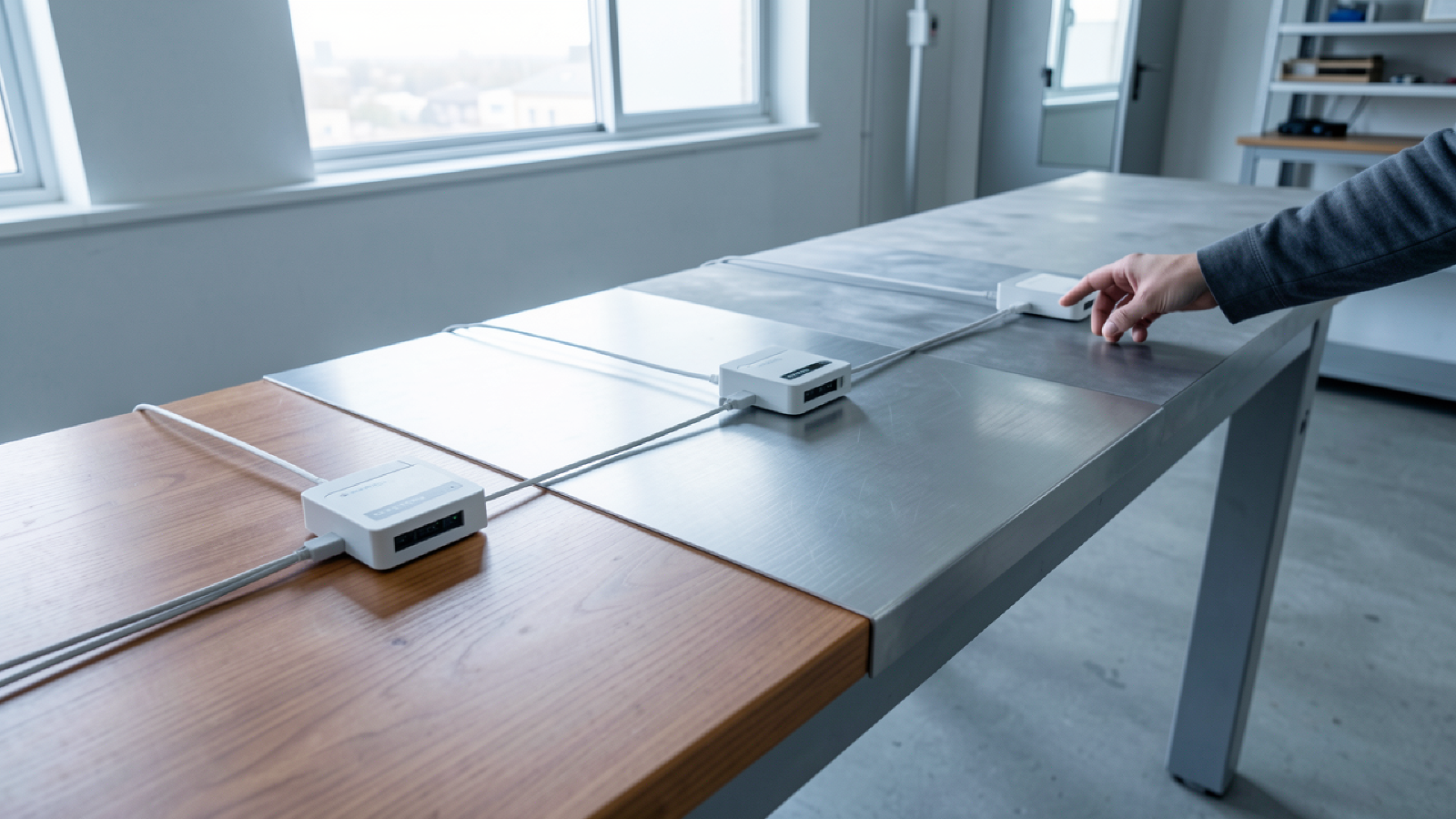
Zone 1 is a local processing tier with three variants. Zone 1-Dedicated is a purpose-built edge device ($150 to $300) running the privacy-critical Tiny LM portfolio: approximately 850 million parameters handling cognitive state estimation, emotional detection, voice analysis, and safety monitoring. Zone 1-Phone runs the same models on the subscriber’s existing smartphone if it meets minimum hardware requirements. No Zone 1 is the subscriber who has neither a qualifying phone nor a dedicated device. When Zone 1 is present, the most sensitive data categories (cognitive state, emotional state, raw voice, raw sensor signals) are processed locally and never transmitted upstream. When Zone 1 is absent, those models run in Zone 2 or Zone 3 under contractual protections.
Zone 2 is a shared regional compute node: a GB10 pair supplemented by AMD 64-gigabyte mini PCs, deployed at a PACE facility, care agency office, or co-location site. A single node serves 150 to 500 subscribers at approximately $5 to $7 per subscriber per month. Zone 2 runs the heavy inference models (Response Generator, Intent Classifier, Domain Experts, MoC Router) and holds the full Memory of Context for each subscriber it serves. Zone 2 coverage is regional and not universal at launch.
Zone 3 is the cloud reasoning layer, always present for every subscriber. It performs deep multi-domain reasoning, handles novel query types that exceed Zone 2 capacity, and serves as the reasoning ceiling of the system. At Phase 1 launch, Zone 3 handles every query for every subscriber before Zone 1 and Zone 2 have deployed. As the architecture matures through Phase 2 (months 12 to 18) and Phase 3 (months 18 to 36), Zone 3’s share of total inference decreases for subscribers who gain local and regional coverage, but Zone 3 never disappears.
Three Zone 1 variants multiplied by two Zone 2 states produce six deployment paths. Path A (Dedicated + Z2 + Z3) is the full stack with maximum privacy and offline resilience. Path F (No Z1 + Z3) is the subscriber whose entire workload runs on Zone 3 through a web interface, IVR, or text message. Paths B, C, D, and E fall between. Each is a first-class deployment. The architecture does not degrade product capability for paths with less local hardware. Path F receives the same concierge architecture, the same fifteen agents, the same reasoning depth as Path A.
Privacy posture is path-dependent and the architecture is specific about the differences. For paths with Zone 1, the most sensitive data is processed locally, enforced by the physical fact that the data does not leave the device. For paths without Zone 1, the same data categories are processed under a healthcare data processing agreement with contractual protections: no retention beyond the inference lifecycle, no training use, HIPAA compliance, audit rights. These are different postures with different threat models. The architecture describes them as such rather than pretending they are equivalent.
The full article details the three-zone compute model, all six deployment paths, the privacy hierarchy across paths, and the consent boundary architecture at bluemirror.tech.