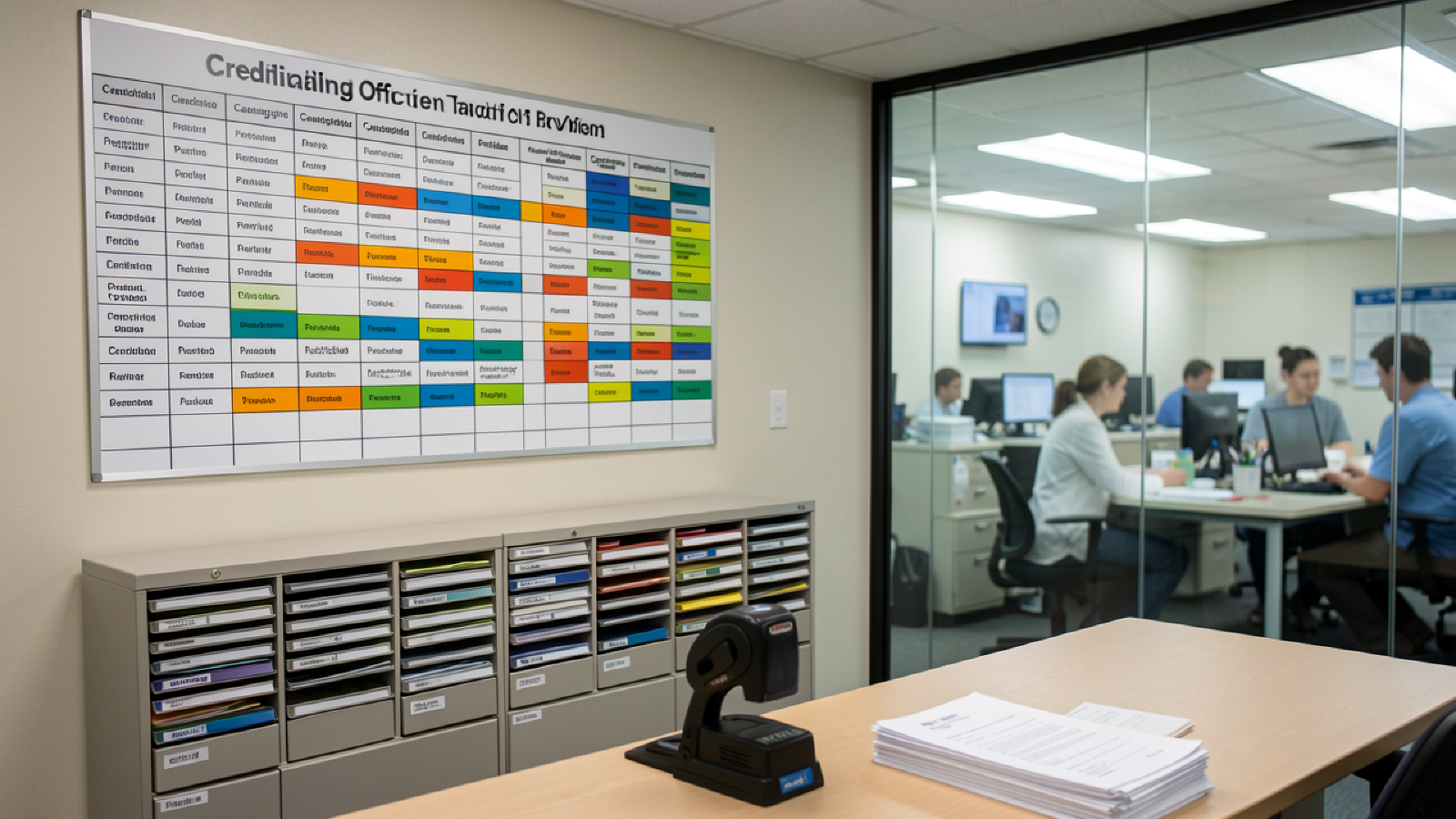
A PE-owned practice group with forty-seven providers across three states discovered the problem during a routine payer audit. One physician’s state medical license had expired six weeks earlier. The renewal notice went to the physician’s previous home address, which she had updated with the state board but which the practice had not updated in its own credentialing files. During those six weeks, the practice billed $180,000 for the physician’s services. The payer recouped all $180,000 when the audit revealed the lapse.
The credentialing concierge would have flagged the renewal ninety days in advance. It would have tracked the renewal submission and confirmed receipt by the state board. When no confirmation arrived thirty days before expiration, it would have escalated. The physician’s home address discrepancy would have been identified during the annual data reconciliation that the concierge performs across all credentialing records. The lapse would not have occurred. The $180,000 would not have been recouped.
Credentialing is the invisible administrative infrastructure that makes a healthcare entity legal. Every provider must be credentialed with every payer, licensed in every state where they practice, privileged at every facility where they operate, current on DEA registration, board certification, malpractice insurance, and, in many states, specific training requirements. A single lapse in any credential means the practice cannot legally bill for that provider’s services from that payer, in that state, or at that facility. In a portfolio of two hundred providers across twelve states, tracking this manually is a full-time job for two to three people, and they still miss things. The paper binder in the credentialing coordinator’s office holds the history. What it does not hold is the future: what is expiring, what requires action, what has been submitted but not confirmed.
The credentialing universe per provider is extensive. State licensure includes the medical license in each state of practice, with renewal cycles ranging from one to three years depending on the state and continuing education requirements that differ state by state. DEA registration covers the federal controlled substance registration and state-specific controlled substance licenses where required. Board certification includes specialty and sub-specialty certification, Maintenance of Certification requirements, and examination cycles. Payer enrollment means credentialing with each commercial payer, Medicare enrollment through PECOS, and Medicaid enrollment per state, with re-credentialing cycles typically running every three years. Facility privileges include hospital privileges, ASC privileges, and privilege delineation per facility with peer review requirements. Malpractice insurance requires tracking policy terms, renewal dates, and coverage adequacy against each state’s minimum requirements. Additional tracking includes NPI maintenance, CAQH profile updates, background checks, and OIG/SAM exclusion monitoring to verify that no provider in the portfolio has been excluded from federal healthcare programs.
Multi-state portfolio operations create exponential complexity. A provider practicing in three states needs three licenses, potentially three DEA registrations, three different continuing education requirement sets, and enrollment with different payer panels in each state. A portfolio with providers in twelve states has twelve different renewal cycles, twelve different CE requirement structures, and potentially hundreds of payer-state enrollment combinations. The credentialing concierge maintains a per-provider, per-state, per-payer credentialing matrix that no spreadsheet system can keep current.
Payer enrollment intelligence is the most operationally impactful credentialing function. When a new physician joins a practice, she must be enrolled with every payer the practice accepts before the practice can bill for her services. Average enrollment processing time ranges from sixty to one hundred twenty days depending on the payer. During that period, the practice operates the physician at full salary with no payer reimbursement for her work. The credentialing concierge pre-assembles enrollment applications before the provider’s start date, populates known fields from the provider’s credentialing profile maintained in the system, identifies missing documentation, submits applications simultaneously to all relevant payers, and tracks each submission through to completion. Portfolio intelligence reveals which payers process enrollment fastest, which require additional documentation at predictable stages, and which have known bottlenecks that can be anticipated.
Non-clinical credentialing extends this agent across service verticals. NEMT companies require driver licensing verification, commercial driver certification where applicable, background check currency, drug testing compliance, and defensive driving training documentation. Home repair contractors require state contractor licensing, liability insurance verification, background screening, and trade-specific certification. Home care aides require competency verification, state-specific training hour documentation, background screening, and periodic competency reassessment. The data model is consistent across all verticals: person, credential, expiration date, jurisdiction, renewal requirements. The specific credentials differ. The tracking architecture is the same.
The concierge does not submit credentials autonomously in initial deployment. The regulatory risk of an incorrect submission, a missed field, or a premature filing is too high. It assembles the application, populates fields, identifies gaps, and presents the complete package for human review and submission. Over time, as demonstrated accuracy builds trust, the autonomy profile can increase for routine renewals where the concierge has a track record of correct assembly.
The forty-seven-provider practice group now tracks every credential for every provider through the concierge. No license expires without ninety-day advance notice. No payer enrollment falls through the cracks. No locum arrives on Thursday without verified active enrollment with every payer the practice accepts. The $180,000 recoupment that triggered the implementation was the last undetected credentialing lapse the group experienced. The credentialing coordinator who previously spent her days managing spreadsheets now spends her time on the judgment calls the system cannot make: evaluating whether a provider should pursue privileges at a new facility, negotiating enrollment timelines with difficult payers, and managing the relationship aspects of credentialing that require human touch.
Cross-References#
BOI-01.12 The Staffing and Workforce Concierge. Credential status directly constrains staffing availability; a provider whose license has lapsed cannot be scheduled.
BOI-01.13 The Upskilling and Training Concierge. Continuing education requirements tracked by the credentialing concierge feed the training concierge’s gap analysis.
BOI-01.14 The Compliance and Accreditation Concierge. Credentialing is a regulatory compliance requirement; active credentials are a prerequisite for billing and clinical operations.
BOI-01.02 The Revenue Cycle Concierge. Billing depends on active credentialing and payer enrollment; claims submitted for uncredentialed providers are denied or recouped.
BOI-03.04 ASC Portfolio. Multi-facility privileging complexity in ambulatory surgery center portfolios.
Technical Appendix BOI-01.11-A is available to partners and investors at partners.bluemirror.tech.