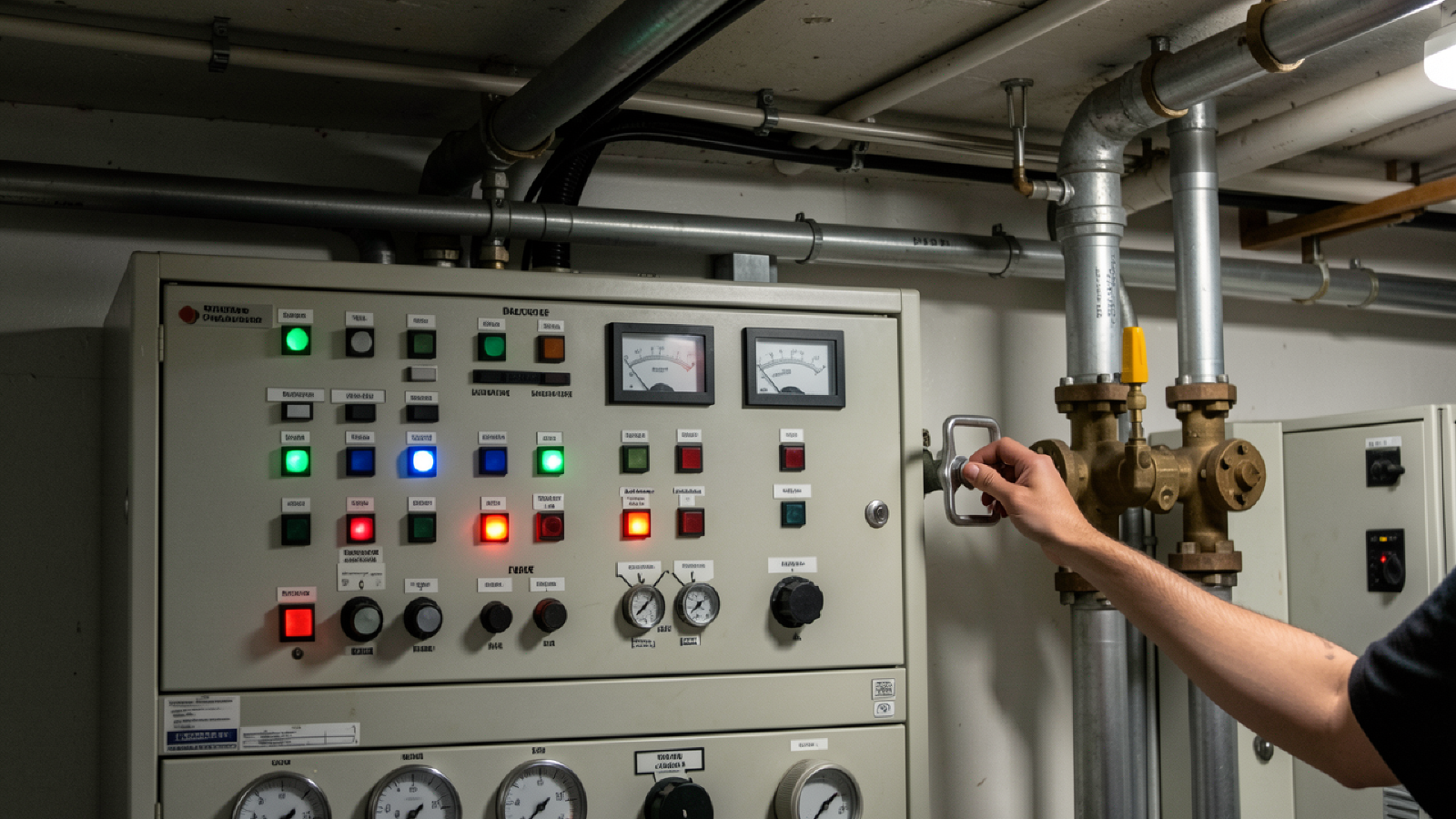
A state surveyor arrives at a PE-owned dialysis center in southeastern Missouri for the annual inspection. She asks for the water treatment system maintenance log. The log shows a gap. Monthly bacteria cultures were missed twice in the past six months. The center’s administrator was unaware of the gaps because the maintenance log is a paper binder maintained by a technician who left the company four months ago. His replacement inherited the binder but not the institutional knowledge of what was due when.
The result: a conditional survey finding, a plan of correction, a state follow-up inspection in sixty days, and a compliance mark on the center’s record that the PE firm’s operating partner will need to explain during the next investor update. The missed cultures did not cause a patient safety event. They created a regulatory event that damages the center’s operating profile and the portfolio’s compliance record.
The facility and maintenance concierge would have flagged each missed culture on the day it was due. Forty-eight hours after the first missed date, it would have escalated to the center director. Seventy-two hours after, it would have alerted the portfolio compliance team. The technician who left would not have taken the maintenance schedule with him because the schedule was not in his head. It was in the system.
This is the least glamorous agent in the operational constellation and possibly the most underestimated. A $200 HVAC filter change deferred for three months becomes a $4,000 compressor failure. A missed fire extinguisher inspection becomes a $15,000 OSHA citation. A medication refrigerator temperature excursion that nobody notices for forty-eight hours invalidates $8,000 in vaccine inventory. Deferred maintenance is one of the largest hidden cost drivers in PE-owned healthcare facilities. It is invisible until it becomes a crisis.
Five maintenance domains compose this agent’s scope. Clinical equipment requires calibration schedules specific to each device: lab analyzers on manufacturer-specified cycles, imaging equipment on state-mandated inspection intervals, patient monitors on annual safety checks. Preventive maintenance per manufacturer specifications. Performance verification that confirms equipment is operating within acceptable tolerances. Safety checks on devices that contact patients. Each device has its own schedule, its own requirements, and its own documentation trail. A lab with forty analyzers, each with quarterly calibration, semi-annual preventive maintenance, and annual performance verification, generates 280 maintenance events per year for analyzers alone.
Facility systems encompass everything that keeps the building operational: HVAC, plumbing, electrical, fire suppression, security systems, elevators, emergency generators. Scheduled maintenance follows manufacturer and regulatory requirements. Inspection compliance tracks against fire marshal schedules, elevator inspection dates, generator load testing requirements, and emergency lighting verification. Vendor management tracks service contracts, response times, and cost benchmarking for comparable services across the portfolio.
Environmental monitoring tracks conditions that clinical operations depend on. Temperature and humidity in labs, pharmacies, and vaccine storage. Air quality in surgical suites where particulate counts must remain below thresholds. Water quality in dialysis centers where chloramine levels must stay within narrow tolerances. Radiation safety in imaging facilities where badge readings track cumulative exposure. Each monitoring domain has its own threshold values, its own alert protocols, and its own regulatory reporting requirements. The medication refrigerator that drifts from 4 degrees to 9 degrees Celsius at 2:00 AM on a Sunday generates an alert before the temperature reaches the threshold where vaccine viability is compromised, not after.
IT infrastructure maintenance is the domain most frequently neglected in healthcare facilities. Network equipment, workstations, servers, medical device connectivity, backup systems, and cybersecurity patching. A firewall that falls behind on security patches creates vulnerability. A server running without verified backups creates data loss risk. Medical device connectivity, the network connections that allow lab analyzers and patient monitors to transmit results to the EHR, requires configuration management that most small practices delegate to whichever staff member “knows computers.” The facility concierge tracks IT maintenance alongside physical maintenance because the consequences of IT neglect are operationally identical to the consequences of physical neglect: downtime, data loss, and regulatory exposure.
Vehicle fleet maintenance applies to NEMT and home health companies. Preventive maintenance by mileage and time intervals. State safety inspections on required schedules. ADA accessibility equipment checks, because a wheelchair lift that fails during a patient pickup is both a safety event and a service failure. Vehicle registration and insurance tracking, because an NEMT vehicle operating with expired registration cannot legally transport patients and creates liability exposure.
Predictive maintenance moves the concierge from scheduled to anticipatory. The autoclave that has required unscheduled repair every eleven months on average gets scheduled preventive inspection at month ten. The HVAC unit whose energy consumption has increased 15% over six months may have a failing compressor. The lab analyzer whose quality control results are trending toward the edge of acceptable range needs recalibration before it fails QC and takes itself offline during peak testing hours. Predictive maintenance reduces both emergency repair costs and unnecessary scheduled maintenance, because some maintenance intervals are based on manufacturer conservatism rather than the actual wear patterns that the equipment demonstrates in its specific operating environment.
Compliance tracking maintains awareness of every facility-type-specific inspection and compliance requirement. Fire inspections. OSHA workplace safety audits. ADA accessibility reviews. Medical waste handling compliance. Radiation safety program reviews. CLIA environmental requirements for labs. State-specific facility licensing renewals. The concierge maintains the compliance calendar, alerts responsible parties with sufficient lead time, documents completion with the required evidence, and generates compliance readiness reports before scheduled inspections. The readiness report answers the surveyor’s question before she asks it: “If the state surveyor walked in today, what would she find?”
Portfolio benchmarking reveals the maintenance patterns that individual entities cannot see. Maintenance cost per square foot by entity. Equipment downtime hours per month trending. Emergency repair frequency. Vendor contract cost comparison across entities using the same vendors. Entities spending significantly below the portfolio average on maintenance are flagged for deferred maintenance risk. The PE firm that squeezes maintenance budgets to improve short-term margin is purchasing a future crisis that the facility concierge makes visible in the present tense. Entities spending significantly above the portfolio average may have vendor pricing issues, unnecessary service contracts, or older facilities requiring proportionally higher maintenance investment. The benchmark does not prescribe a spending level. It makes the variation visible so the operating partner can investigate the causes.
The dialysis center in southeastern Missouri now maintains its water treatment schedule through the concierge. So does every other facility in the portfolio. The maintenance log is not in a binder. The maintenance schedule is not in anyone’s head. The next surveyor will find documentation that is current, complete, and verifiable. The $200 filter change gets done on time. The compressor does not fail. The culture does not get missed. The surveyor finds no gaps. None of this is dramatic. All of it is necessary.
Cross-References#
BOI-01.09 The Procurement Concierge. Equipment lifecycle data from the maintenance concierge feeds procurement decisions on replacement timing and total cost of ownership.
BOI-01.08 The Supply Chain Concierge. Maintenance supplies and parts inventory management intersects with supply chain optimization.
BOI-01.14 The Compliance and Accreditation Concierge. Facility compliance requirements overlap with regulatory compliance; the maintenance concierge tracks the facility-specific subset.
BOI-03.01 Physician Practice Portfolio. Practice-specific facility requirements including medical office building maintenance and clinical space environmental standards.
BMT-01.06 The Home Maintenance Concierge. The consumer parallel agent that applies similar architectural patterns to residential maintenance in the consumer context.
Technical Appendix BOI-01.10-A is available to partners and investors at partners.bluemirror.tech.