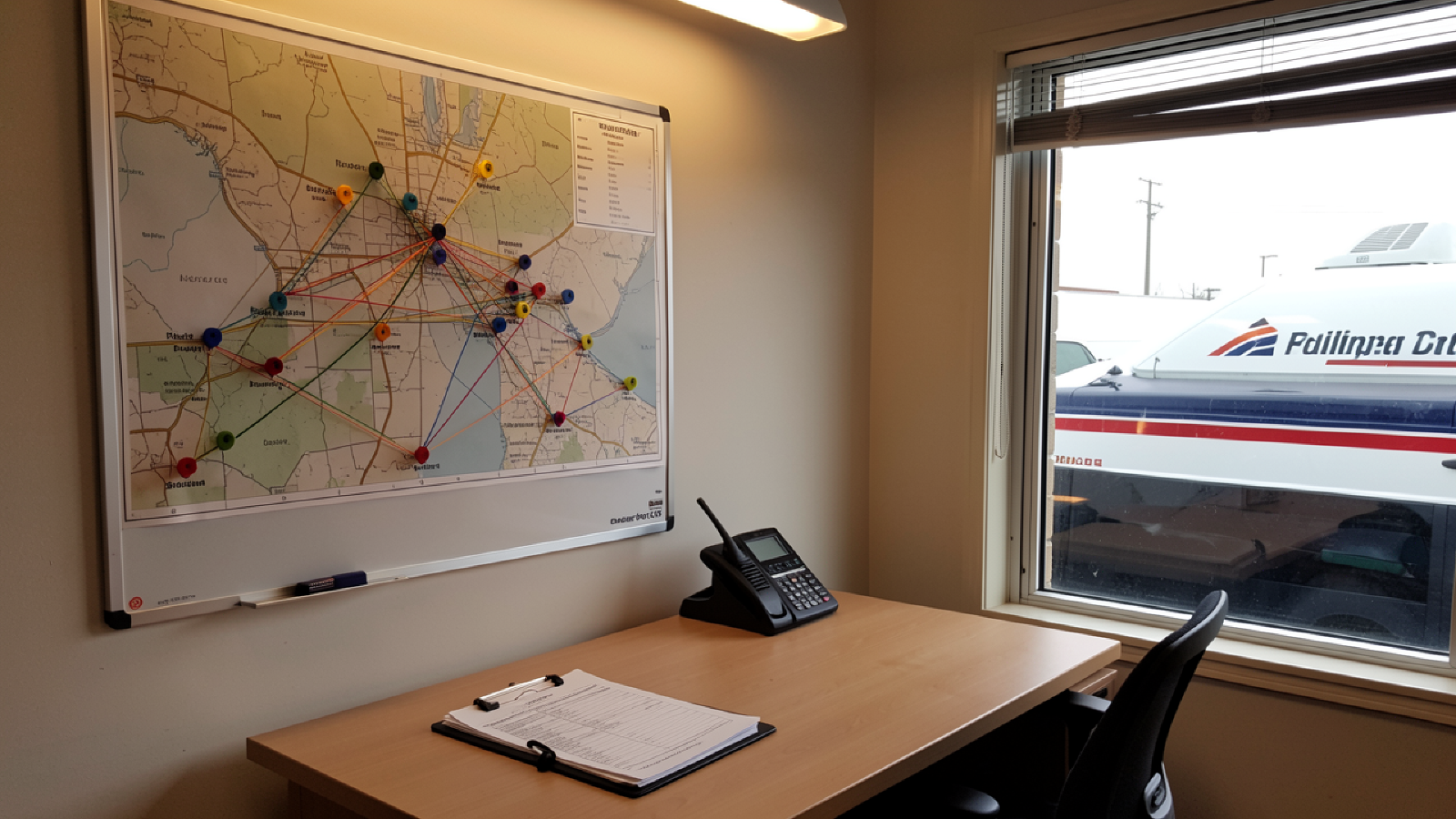
A lab courier picks up specimens from twelve physician offices on a morning route in the Research Triangle region of North Carolina. The route was built last year based on geography and roughly equal stop counts. What it does not account for: one of those offices generated a stat specimen this morning, a troponin panel that needs to arrive at the lab within two hours to be clinically useful. The courier’s standard route gets it there in three and a half hours.
The routing and logistics concierge rerouted. A different courier was already in the area, completing pickups from a second route. That courier diverted to the stat office, picked up the troponin specimen, and delivered it to the lab in ninety minutes. The remaining specimens on the first courier’s route continued on the standard schedule. No phone calls. No manual coordination. No dispatcher juggling a whiteboard.
No consumer concierge has a parallel to this agent. The routing and logistics concierge moves things and people between locations: specimens from physician offices to labs, patients from homes to appointments, meals from kitchens to doorsteps, supplies from warehouses to clinics, mobile imaging units between facilities. This is pure operational logistics, and in healthcare it is managed with a combination of phone calls, paper manifests, and improvisation.
Four logistics domains compose this agent’s work. Specimen logistics manages lab courier routing with awareness of specimen stability. Some specimens degrade if not processed within specific timeframes: a coagulation panel in a citrate tube has a four-hour processing window, a blood gas in a heparinized syringe has thirty minutes, an iced specimen for ammonia loses clinical validity rapidly at room temperature. The routing concierge knows these constraints and builds routes that respect them. Stat specimens get priority routing. Routine specimens ride efficient routes. Reference lab send-outs that require overnight shipping to distant reference labs get to the shipping facility before the cutoff time. Chain-of-custody tracking documents every handoff for every specimen, creating the audit trail that accreditation bodies and malpractice defense counsel require.
Patient transport logistics, primarily NEMT, manages multi-stop routing, wheelchair and stretcher vehicle matching to patient needs, pickup window management that balances punctuality with route efficiency, return trip coordination with appointment duration estimates, and Medicaid trip verification documentation per state requirements. The NEMT routing concierge coordinates with the scheduling concierge (BOI-01.06): when the scheduling concierge books Margaret’s cardiology appointment at 10:30 AM, the routing concierge calculates the pickup time, assigns the appropriate vehicle type based on Margaret’s accessibility needs shared through the membrane, and builds the multi-stop route that gets her there on time while serving other patients along the geographic corridor.
Delivery logistics serves food-is-medicine companies and medical supply operations. Meal delivery route optimization accounts for temperature maintenance requirements that medical consumable deliveries do not have. A medically tailored meal prepared at 6:00 AM must arrive at the recipient’s home within a delivery window that maintains food safety standards. Medical supply delivery scheduling coordinates with care plans: wound care supplies need to arrive before the home care aide’s next visit, not after. Durable medical equipment delivery and pickup coordination manages the logistics of getting a hospital bed to a home and retrieving it when it is no longer needed.
Mobile service deployment coordinates the routing of shared assets that serve multiple entities. Mobile imaging units that travel between small practices and rural clinics. Home phlebotomy services that follow routes similar to courier routes but with patient interaction at each stop. Mobile health screening units for community-based preventive care programs. Each mobile asset requires scheduling coordination with the entities it serves, route optimization across service points, and equipment readiness verification at each stop.
Real-time adaptation handles the inevitable disruptions. Vehicle breakdown: the concierge reroutes affected stops to the nearest available vehicle, recalculates estimated times for all downstream stops, and notifies affected parties. Patient cancellation: the remaining route is reoptimized and the waitlist is checked for a fill-in pickup along the existing route. Traffic or weather delays: estimated arrival times adjust, affected parties receive updated windows, and stop sequencing changes if priority shifts make a different order more efficient. Stat specimen request mid-route: the concierge evaluates whether the current courier can accommodate the pickup within the specimen’s stability window or whether a different asset is better positioned. These decisions happen in seconds because the routing model maintains real-time awareness of every asset’s position, destination, and remaining capacity.
Portfolio-level logistics creates optimization opportunities that no single entity could achieve. The lab courier and the NEMT driver serve different entities within the same PE portfolio but cover the same geography. Can courier routes be coordinated to reduce fleet costs? Can NEMT vehicles carry non-urgent specimens on shared routes when geographic overlap exists? The logistics concierge identifies co-routing opportunities that save fuel, time, and fleet cost. Privacy constraints govern these opportunities: patient transport information and specimen information have different privacy requirements. Co-routing a patient and a specimen in the same vehicle is logistically efficient but requires that both privacy domains be respected. The patient’s destination is her medical appointment, which is protected health information. The specimen’s origin is a physician office, which is operational data. The co-routing model respects both.
The consumer connection makes the logistics invisible. The NEMT routing concierge’s route optimization connects to the consumer health concierge’s appointment scheduling through the membrane. The vehicle arrives at the right time, at the right address, with the right accessibility equipment. Not because the dispatcher got a phone call from Margaret’s family, but because the platform coordinated the information through scoped consent. The meal delivery route connects to the nutrition concierge’s dietary profile. The aide’s visit schedule connects to the caregiver concierge’s care plan. Operational logistics becomes the infrastructure layer beneath consumer experience, felt by the consumer as reliability and never seen as complexity.
Cross-References#
BOI-01.06 The Scheduling and Throughput Concierge. Scheduling drives logistics requirements; appointment times determine pickup windows and delivery schedules.
BOI-01.08 The Supply Chain Concierge. Supply delivery routing for consumable inventory replenishment across locations.
BOI-04.01 NEMT Portfolio. The NEMT vertical deep dive where routing and logistics is the primary operational discipline.
BOI-04.02 Food is Medicine Portfolio. Meal delivery logistics with temperature maintenance and dietary compliance requirements.
BMT-01.02 The Health Concierge. Consumer-side appointment coordination that drives NEMT routing through the membrane.
Technical Appendix BOI-01.07-A is available to partners and investors at partners.bluemirror.tech.