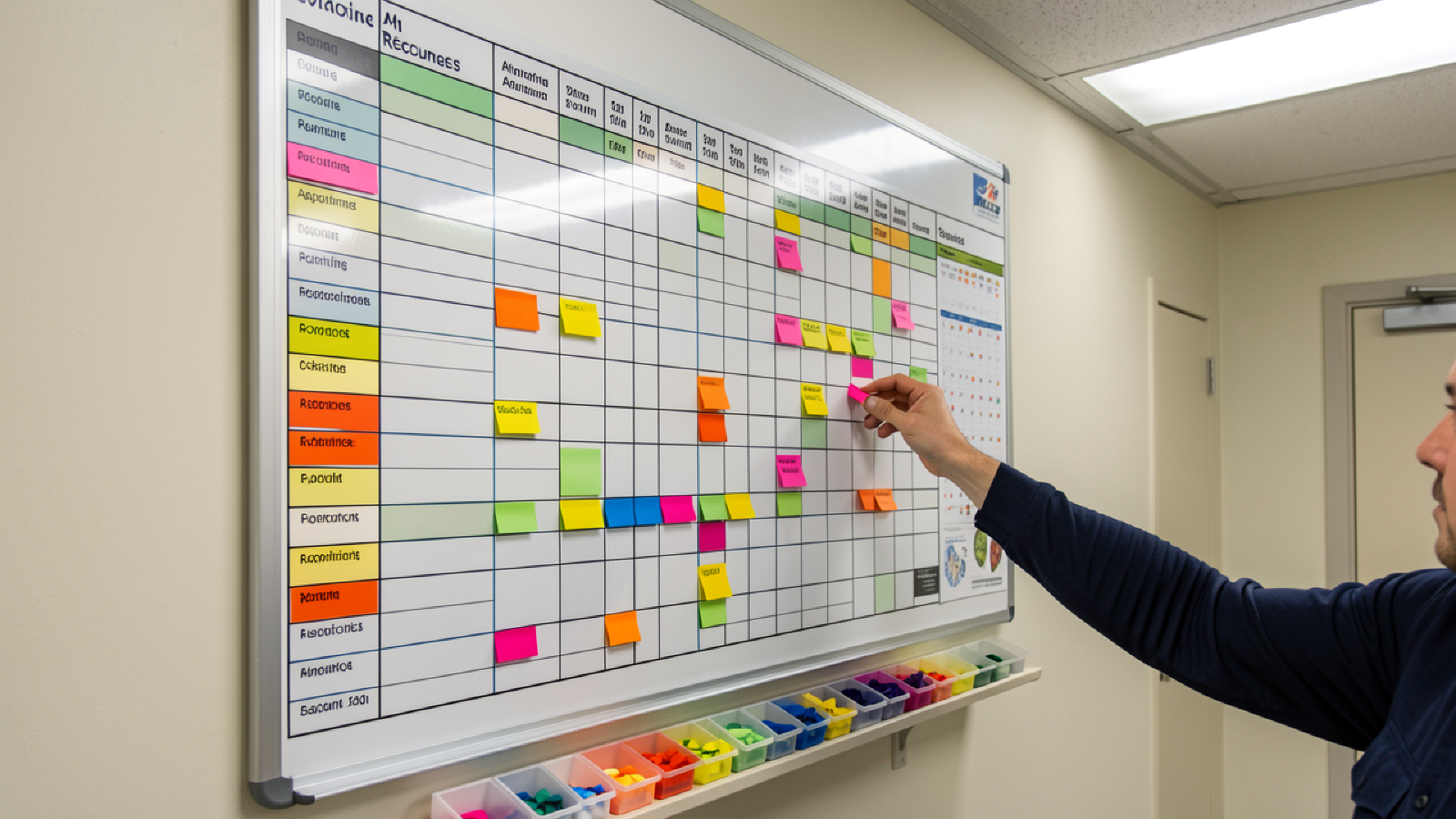
A dialysis center in suburban Atlanta operates twenty-four chairs across three shifts. On paper, the center can treat 288 patients per week. In practice, it treats 204. Average utilization: 71%.
The scheduling and throughput concierge analyzed six months of scheduling data and identified four sources of the gap. Eight percent of available chair-hours are lost to no-shows, predictable by patient history and day of week. The center’s Monday no-show rate is 19%; Thursday’s is 6%. Six percent is lost to suboptimal shift assignment, patients assigned to shifts that conflict with their actual transportation availability or work schedules, resulting in chronic rescheduling and gaps. Four percent is lost to scheduling rigidity: thirty-minute turnover buffers between patients that actual turnover data shows should be fifteen minutes for standard hemodialysis and twenty-two minutes when the chair requires a fluid systems check. The remaining eleven percent represents the gap between capacity and demand that requires marketing and referral work, which the scheduling concierge flagged to the referral concierge (BOI-01.16) for attention.
Achievable utilization with scheduling optimization alone, holding demand constant: 82%. Revenue impact at this center at current reimbursement rates: $340,000 annually. No additional staff. No additional equipment. No additional patients. The same twenty-four chairs generating $340,000 more revenue because the scheduling matches reality instead of a static template.
Healthcare scheduling is deceptively complex. An imaging center does not simply “schedule an MRI.” It allocates a specific magnet for a specific duration based on the body part, the protocol, whether contrast is required (which adds preparation time and nursing staff), whether the patient needs sedation (which adds recovery time, a nurse, and an anesthesia provider), whether the radiologist with the appropriate subspecialty read capability is available, and whether the referring physician needs the results within a specific timeframe. Every clinical vertical has its own version of this complexity.
The scheduling and throughput concierge learns the entity’s actual scheduling patterns. Not the template. The reality. The thirty-minute appointment that always runs forty-five minutes for Dr. Chen but exactly thirty minutes for Dr. Patel. The 2:00 PM no-show rate that is 22% on Mondays and 8% on Thursdays. The MRI slot that could accommodate a simpler non-contrast study when the scheduled patient is fifteen minutes late and the next complex study is not for ninety minutes.
Domain-specific scheduling varies substantially across verticals. Physician practices require appointment type duration optimization, provider-specific pace learning, same-day and urgent slot management, and telehealth versus in-person routing decisions. Imaging centers manage modality-specific scheduling where MRI sequences range from twenty to ninety minutes, contrast preparation time, sedation requirements and recovery room availability, subspecialty radiologist availability matching, and equipment maintenance windows that block scheduling. Ambulatory surgery centers manage operating room block time allocation, case sequencing from clean to contaminated and short to long, surgeon preference learning for turnover requirements, equipment and implant pre-positioning that affects room readiness. Dialysis centers manage chair assignment by treatment modality, shift optimization to match patient transportation patterns, and treatment duration variations by hemodialysis versus peritoneal dialysis modality. Physical therapy practices balance therapist caseloads, treatment session durations that vary by diagnosis and treatment phase, equipment sharing across simultaneous patients, and the distinction between group and individual session scheduling. NEMT companies manage route-based scheduling with pickup windows, multi-stop optimization, return trip coordination, and vehicle type matching to patient accessibility needs. Home care agencies optimize aide geographic assignments, visit duration by care plan complexity, travel time between clients, and client preference matching for aide familiarity and continuity.
The agent is one agent. The scheduling constraints, the optimization objectives, and the domain-specific small language models differ by vertical.
No-show prediction drives one of the most immediately impactful capabilities. The model learns patient-level factors: individual history of no-shows, day-of-week patterns, distance from the facility, weather conditions on the appointment date, appointment type, and time since the last no-show. Operational responses calibrate to the prediction: strategic overbooking calculated to match the predicted no-show rate for that day and time slot, automated reminders timed to the individual patient’s demonstrated response patterns, and waitlist management that fills cancellations within minutes of notification. An ethical boundary applies: no-show prediction must not be used to deny care or penalize patients. A patient with a high no-show probability still receives the appointment. The system adjusts the schedule around the probability without discriminating against the patient.
Multi-location scheduling adds a portfolio dimension. When a patient could be seen at Practice A or Practice B within the same portfolio, the system can suggest routing to the location with available capacity, but only if the patient consents to the suggestion. Cross-entity load balancing does not force patients to change locations. It offers options when one location has a three-week wait and another location fifteen miles away has availability this week. Wait time equalization across portfolio entities. Shared resource scheduling for mobile imaging units, traveling specialists, and float pool staff that serve multiple locations.
Portfolio intelligence benchmarks utilization across entities and raises the right questions. Why is this imaging center at 68% utilization while that one is at 89%? Is the difference scheduling efficiency, demand, staffing constraints, equipment limitations, or referral patterns? The scheduling concierge provides the data. The portfolio intelligence agent (BOI-01.18) provides the analysis. Throughput trending over time. Bottleneck identification within and across entities. Capacity planning for growth: at current growth rates, when does this entity need additional capacity, and what form should that capacity take?
The scheduling concierge is the first agent most PE firms want deployed, and for good reason. The ROI is immediate and measurable. Every percentage point of utilization improvement converts directly to revenue without requiring additional staff or equipment. The disruption to existing workflows is minimal because the system suggests and staff confirms during the initial deployment period. The data requirements are modest: existing scheduling system data is sufficient to begin analysis. The behavioral change required is low because staff already schedule; they simply schedule better with better data. Time to value: thirty to sixty days from deployment to measurable utilization improvement.
The dialysis center in suburban Atlanta moved from 71% utilization to 83% in the first quarter. The scheduling concierge is still learning. The operating partner expects 86% by month six. The twenty-four chairs are the same chairs. The patients are largely the same patients. The schedule is different because it is built on what actually happens instead of what the template assumes.
Cross-References#
BOI-01.07 The Routing and Logistics Concierge. Scheduling drives routing requirements for NEMT and mobile services; appointment times determine pickup windows.
BOI-01.12 The Staffing and Workforce Concierge. Scheduling changes require workforce adjustment; the scheduling concierge optimizes when patients are seen while the workforce concierge optimizes who is available to see them.
BOI-01.16 The Referral and Relationship Concierge. Scheduling availability and access metrics affect referral patterns and referring physician satisfaction.
BOI-01.17 The Patient Experience Concierge. Wait times and appointment access are the most frequently cited patient experience factors in satisfaction surveys.
BOI-02.01 The Operational Brain. Scheduling as part of multi-agent orchestration where a scheduling change triggers workforce, credentialing, and compliance verification.
Technical Appendix BOI-01.06-A is available to partners and investors at partners.bluemirror.tech.