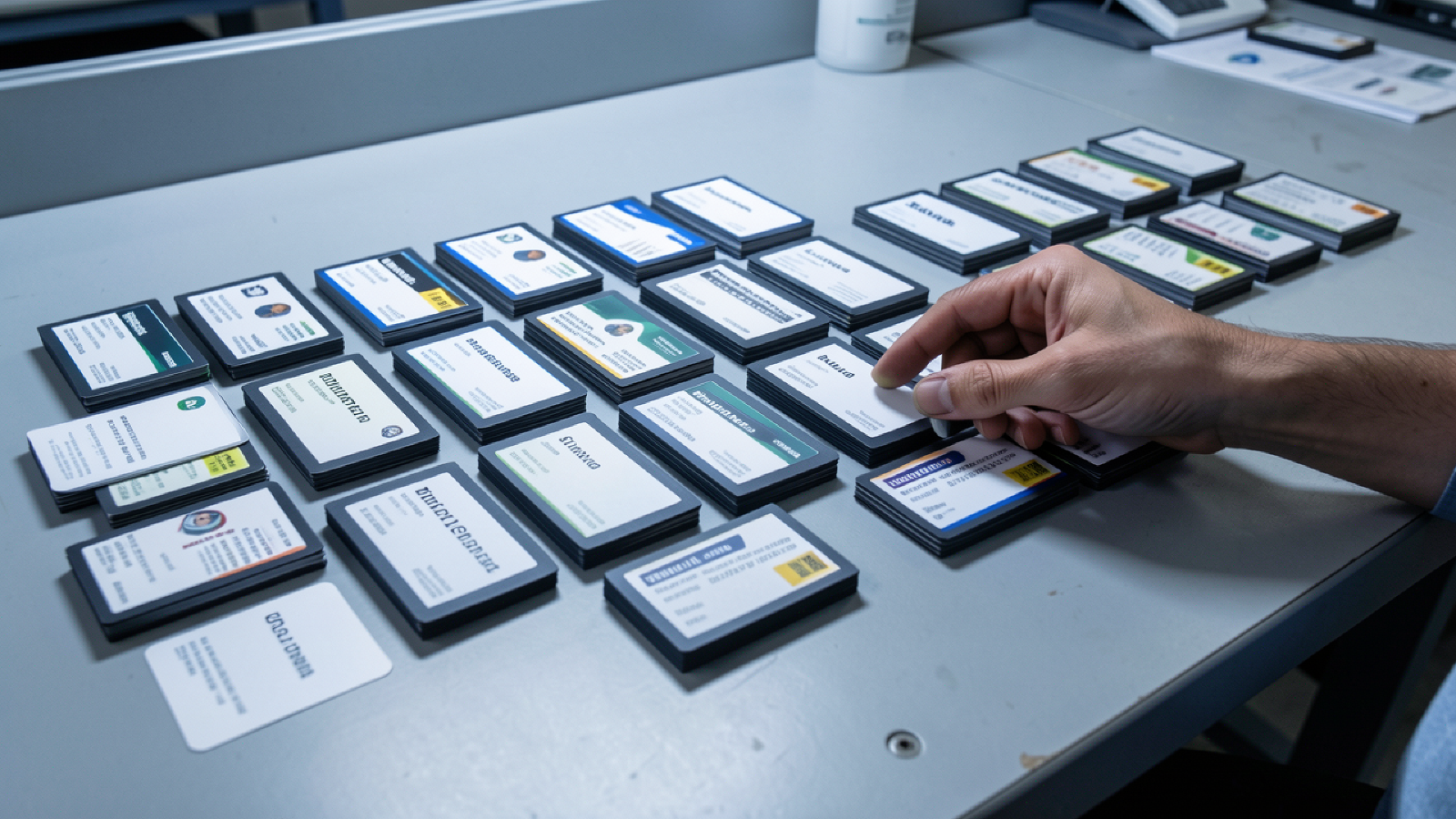
David Okonkwo is the systems architect on a Phoenix-area home health agency that has agreed to deploy BlueMirror into eighty households over the next year. He is reading the agent inventory because he needs to know what runs where, who calls what, and where his agency’s existing care management software fits. He opens the document expecting either a marketing list (thirty-eight named features dressed up as agents) or an undifferentiated technical specification (here are thirty-eight identical objects with different parameter values). What he finds is neither. The thirty-eight infrastructure agents are organized by domain, each with a defined autonomy default, a deployment preference, and a clear boundary on what it does and does not do.
This is the workforce. The fifteen concierge agents in Series 01 are the public face. The thirty-eight infrastructure agents are who the concierge agents direct. They organize by domain because domain expertise cannot be cleanly separated from domain context. A generic task executor cannot manage medications, because medication management is not a generic task. The Medication Manager understands pharmacy workflows, drug interaction patterns, refill cadence, adherence signals, patient assistance programs, and copay arithmetic. None of that is portable to other domains. A scheduling agent does not need it. A nutrition agent does not need it. The decomposition follows the structure of the work.
Each infrastructure agent carries two attributes that David needs to know before he integrates. The autonomy default is the level of independent action the agent can take before requiring human approval. It runs from 0.25 to 0.75 on the Human Agency Scale, with the value reflecting the risk profile of the domain. The deployment preference is where the agent runs. Edge only, edge priority, edge or cloud, cloud only. The preference reflects the latency requirement and the privacy constraint of the data the agent handles.
These two attributes are not configurable by the agency. They are set by the architecture. The agency’s deployment touches the integration surface, not the infrastructure tier.
Why thirty-eight#
The decomposition follows from the concierge architecture. Each concierge needs infrastructure agents that own specific capabilities. The number is not a target. It is a count.
The health concierge needs eight because healthcare has eight distinct operational domains: medications, appointments, care transitions, symptoms, cognition, nutrition, exercise, and vital signs. Each domain has its own data model, its own external integration requirements, and its own pattern of escalation. Collapsing them into fewer agents would force each agent to reason across domains it does not need to reason across. Splitting them into more agents would create coordination overhead between agents that should be one agent.
Family coordination needs five. Memory care needs six because the population requires specialized capabilities not shared with general interaction. External integration needs five for the major external system categories the architecture touches at infrastructure depth. Blue Pane membrane needs five for the membrane functions described in Series 03. Learning and literacy needs three: a knowledge graph agent, an adaptive content agent, and a comprehension assessment agent, each handling a distinct phase of the learning loop. End-of-life coordination needs four: advance directive management, comfort monitoring, legacy coordination, and care circle transition, each governing a domain that the other agents in the system cannot safely subsume. The total is thirty-eight. The number is driven by domain logic. It is not driven by engineering convenience or by any preference for round numbers.
The decomposition has implications for how the agency’s existing software integrates. David’s care management system tracks appointments, medications, and care plans. It will integrate with three of the eight healthcare agents (Appointment Coordinator, Medication Manager, Care Transition Manager) plus one of the five family coordination agents (Communication Manager). The other agents he does not touch. The existing functionality of the agency’s software is preserved. The BlueMirror agents add capability around it.
Healthcare agents#
The largest domain group. Eight agents.
The Medication Manager handles reminders, refills, adherence tracking, and interaction checks. Autonomy 0.75. Deployment preference: edge priority, with cloud fallback for prescription database queries. The most frequently invoked healthcare agent. Multiple concierge agents call it. The health concierge calls it for the obvious reasons. The buying agent calls it for procurement timing. The nutrition concierge calls it for dietary interactions with specific medications. The high autonomy reflects the observational character of most medication management; the agent reminds, tracks, and notes, but does not change the prescription. Changes go through human approval.
The Appointment Coordinator schedules, arranges transportation, sends reminders, and confirms. Autonomy 0.5. Deployment preference: edge or cloud, depending on the integration target. Lower autonomy than the Medication Manager because scheduling involves commitments that affect other people. A cancellation creates downstream consequences for the provider and for the family. The agent does not initiate cancellations autonomously; it queues them for the person’s approval.
The Care Transition Manager handles discharge planning, home services coordination, and follow-up. Autonomy 0.25. Deployment preference: cloud, because the integration surface for care transitions is large and changes frequently. The lowest autonomy in the healthcare domain because care transitions involve irreversible decisions and multi-party coordination. A misstep here costs days of recovery and possibly a readmission. The agent gathers information, builds the transition plan, and presents it for approval. Execution proceeds only after approval.
The Symptom Monitor performs pattern detection across self-reported symptoms and vital signs, generates alerts when patterns warrant attention. Autonomy 0.5. Deployment preference: edge priority. Continuous background operation. Feeds the health concierge with trend data. The agent does not diagnose. It identifies patterns and surfaces them. The diagnosis remains the physician’s responsibility.
The Cognitive State Assessor tracks orientation, detects cognitive fluctuation, monitors lucidity. Autonomy 0.75. Deployment preference: edge only. Shared between the health concierge and the cognitive concierge. Edge only because cognitive assessment requires sub-second response and because cognitive state data is the most sensitive data the system holds. The data does not leave the device.
The Nutrition Tracker logs meals, tracks dietary adherence, surfaces deviations from prescribed restrictions. Autonomy 0.5. Deployment preference: edge. Feeds the nutrition concierge and the buying agent. Lower autonomy than the Medication Manager because dietary recommendations are often contested by the person and require collaborative adjustment rather than autonomous adjustment.
The Exercise Monitor tracks activity, assesses mobility, integrates with wearable devices. Autonomy 0.5. Deployment preference: edge. Fall detection integrates here when wearable hardware supports it. The agent does not prescribe exercise. It monitors what the person does and surfaces patterns to the health concierge.
The Vital Signs Analyst trends blood pressure, glucose, weight, and oxygen saturation, producing the time-series data the Symptom Monitor reasons over. Autonomy 0.75. Deployment preference: edge priority. Continuous monitoring. High autonomy because trending is observational, not interventional. The agent identifies a trend; the health concierge decides whether the trend warrants action; action requires the person’s approval.
Eight agents covering eight operational domains. Each with a defined boundary. Each with a defined autonomy. Each calling specific small language models from the thirty-model portfolio described in BMT-02.03.
Family coordination agents#
Five agents. Calendar Coordinator, Decision Facilitator, Communication Manager, Visit Scheduler, Care Circle Notifier.
The work of these agents is information flow management. The person served does not become the switchboard for her own care. The Communication Manager routes the right information to the right family member at the right moment. The daughter receives the weekly health summary because she has subscribed to it. The son does not receive it because he has not. The granddaughter receives a different summary, focused on social engagement, because that is what she has asked for.
The Decision Facilitator manages family decisions that require input from multiple people. The choice of a specialist, the timing of a move, the response to a hospital readmission. The agent gathers input, visualizes options, tracks consensus, and presents the result. It does not make the decision. It removes the coordination cost of making the decision well.
The Visit Scheduler manages rotations among caregivers and visiting family members. The Care Circle Notifier sends targeted alerts when the situation changes, with the targeting calibrated to each member’s preferences and information needs.
The privacy boundaries within the family are enforced here. The daughter sees the weekly health summary. The son does not. The son sees the home maintenance status. The daughter does not. The agents do not leak across these boundaries. Each family member’s view is constructed for her, and what she sees is what the person served has authorized her to see.
Autonomy across these five agents averages 0.5. Deployment is edge or cloud, depending on which integrations the family uses. Calendar integration with Google or Outlook runs cloud. Direct in-system family messaging runs edge.
Memory care agents#
Six agents. Orientation Assistant, Reminiscence Facilitator, Routine Anchor, Wandering Prevention, Sundowning Support, Communication Adapter.
All six deploy at high autonomy, 0.75. Five of six deploy edge only. The reasons are tightly coupled.
The latency argument first. Cognitive support that takes three seconds is cognitive support that embarrasses. A person experiencing disorientation does not have three seconds to spare. She is already losing the thread. If the system pauses to query a cloud service, the moment is lost and the support becomes a confirmation of the deficit rather than a correction of it. The Orientation Assistant must respond in well under a second. The Confusion Detector that triggers it must run continuously in the background. Both run on edge. There is no other place they can run and still serve the function.
The privacy argument second. Cognitive state data is the most sensitive data the system holds. A leaked medication list is a privacy violation. A leaked cognitive assessment is a profile of mental decline that affects insurance eligibility, employment, family relationships, and legal capacity. The system’s privacy commitment is that this data does not leave the device. The architecture enforces the commitment by deploying the agents that produce the data on edge. The data exists only on the person’s device. There is no cloud copy. There is no migration path. There is, deliberately, no central archive of cognitive trajectories the company could be subpoenaed to release.
The high autonomy reflects the urgency of the support. A person showing signs of sundowning at 4 p.m. cannot wait for human approval to receive a calming intervention. The Sundowning Support agent acts. The action is logged. The family is notified. But the support is not delayed.
The Communication Adapter, the one cloud-eligible agent in this group, adjusts language complexity in real time based on cognitive state signals. It runs in cloud when the device is connected, edge when the device is not. The agent’s output is reviewed by the Safety Filter before delivery, which keeps the cloud-edge transition transparent to the person.
External integration agents#
Five agents. Pharmacy Liaison, Provider Communicator, Insurance Navigator, Transportation Coordinator, Emergency Responder.
These are the agents that touch systems outside BlueMirror. Each requires a specific trust level from the external party, established through the Blue Pane membrane described in Series 03. The external system does not see the person’s full context. It sees only what its trust level entitles it to see.
The Pharmacy Liaison handles refill orders, copay calculations, patient assistance program enrollment, and prescription history sync. Autonomy 0.5, deployment cloud. Trust level requirements: the pharmacy must be enrolled, must support the refill API, and must accept the trust attestation the membrane provides.
The Provider Communicator routes structured communications to the person’s physician panel. Appointment summaries, between-visit questions, vital sign deltas the physician asked to be flagged. Autonomy 0.25, deployment cloud. The lower autonomy reflects the formality of provider communication. The agent drafts; the person approves; the message is sent.
The Insurance Navigator handles claims, prior authorizations, appeals, and benefits questions. Autonomy 0.25, deployment cloud. The same logic applies. Insurance communication is consequential and adversarial. The agent prepares; the person approves; the action proceeds.
The Transportation Coordinator integrates with rideshare, paratransit, and family driver scheduling. Autonomy 0.5, deployment cloud. Higher autonomy because most rides do not have downstream consequences worth the friction of human approval. A ride to the grocery store does not need a confirmation step.
The Emergency Responder is the exception that proves every rule. Autonomy 0.75, deployment edge priority with mandatory cloud failover. Trust level requirement: maximum. This is the only infrastructure agent permitted to break privacy boundaries in a life-threatening situation. When a fall is detected and the person does not respond to the verification prompt, the Emergency Responder shares the person’s location, medical conditions, and emergency contact list with the responding service. The action is not negotiable. It is the architectural answer to the question: what does the system do when the person cannot consent because the person is unconscious. The answer is to treat the prior consent, given at setup, as authorization for the emergency action.
Blue Pane membrane agents#
Five agents. Context Gate Controller, Trust Scorer, Negotiation Sandbox Manager, Manipulation Detector, Audit Trail Logger.
These are not user-facing. They are the infrastructure that protects the user from the external agent world that BlueMirror operates inside. The full treatment is in Series 03. They are introduced here because the inventory is incomplete without them.
The Context Gate Controller manages what external agents can see, by trust tier and by domain. The Trust Scorer evaluates and assigns trust tiers in real time as external agents interact with the membrane. The Negotiation Sandbox Manager creates isolated environments for agent-to-agent interactions where commitments are not binding until the membrane releases them. The Manipulation Detector identifies urgency attacks, preference probing attempts, and inference extraction patterns that indicate an external agent is trying to obtain information it has not been granted. The Audit Trail Logger records every interaction with cryptographic signatures that allow after-the-fact reconstruction of what an external agent did.
These five agents deploy edge or cloud depending on their function. The Context Gate Controller, Trust Scorer, and Manipulation Detector run edge to keep latency low for external interactions. The Negotiation Sandbox Manager runs cloud because it requires substantial compute. The Audit Trail Logger runs both, with edge logging for low-latency capture and cloud aggregation for long-term retention.
Learning and literacy agents#
Three agents. Knowledge Graph Agent, Adaptive Content Agent, Comprehension Assessment Agent.
Every other concierge agent in the system assumes the person understands what she is being helped with. The learning and literacy concierge fills the gap when that assumption fails. The three infrastructure agents that power it each handle a distinct phase of the learning loop.
The Knowledge Graph Agent maintains a per-subscriber model of what the person understands, organized by domain (health, financial, digital, legal) and by concept within each domain. Each concept node carries a comprehension score that is updated through observation rather than examination. The agent does not test the person. It watches what she does after a learning interaction and infers from her behavior whether the concept landed. Autonomy 0.75. Deployment preference: Zone 3 cloud in Phase 1, Zone 1 edge target in Phase 2 for in-session latency reduction.
The Adaptive Content Agent translates information from the source domain into a format calibrated to the subscriber’s current learning profile. When the health concierge surfaces a new diagnosis or the financial concierge makes a recommendation, the Adaptive Content Agent reformats the underlying explanation to match how this person learns: narrative or sequential, analogical or structured, written or spoken. It does not choose the content. It chooses the form. Autonomy 0.75. Deployment preference: Zone 3 cloud.
The Comprehension Assessment Agent evaluates whether a learning interaction achieved comprehension by monitoring behavioral, linguistic, and temporal signals after the interaction. If comprehension confidence falls below threshold, it routes a retry instruction to the Adaptive Content Agent with a different style configuration. If two retries fail, it flags the concept for human expert routing through the Expert Exchange Layer. Autonomy 0.75. Deployment preference: Zone 3 cloud.
The three agents together handle a capability no single other agent can absorb: the continuous, observation-based, privacy-respecting assessment of whether the person being served actually understands what the system is doing for her.
End-of-life coordination agents#
Four agents. Advance Directive Manager, Comfort Monitoring Agent, Legacy Coordination Agent, Care Circle Transition Agent.
These agents are dormant until the subscriber explicitly activates the end-of-life concierge. Activation requires direct subscriber decision or authorized proxy action. No clinical signal, family request, or system inference triggers activation. The agents are present in the infrastructure to be ready when called. They are not active by default.
The Advance Directive Manager holds the subscriber’s advance directives and healthcare proxy designations in structured, versioned storage. It maintains the distribution record of which clinical entities have received copies, monitors for subscriber-initiated revision requests, and coordinates with the Legal Advocate Concierge for documentation updates. Autonomy 0.25, the lowest in the system. No action is taken on any directive without explicit subscriber or authorized proxy confirmation. Deployment preference: Zone 3 cloud in Phase 1, Zone 1 edge target in Phase 2 for offline availability in connectivity-constrained scenarios.
The Comfort Monitoring Agent observes and records symptom and pain patterns through subscriber self-report, passive behavioral inference, and connected sensor data where authorized. It does not produce clinical assessments. It produces structured observation records and surfaces pattern anomalies to the subscriber and, with her authorization, to designated clinical contacts. Autonomy 0.5. Deployment preference: Zone 3, with Zone 1 sensor ingestion where Local Pane devices are present.
The Legacy Coordination Agent manages the capture, organization, and controlled transmission of legacy assets: letters, recordings, personal histories, instructions the subscriber wants carried out. It maintains a transmission schedule and recipient registry configured entirely by the subscriber. No transmission occurs without explicit subscriber instruction or a post-death trigger the subscriber has pre-configured and a designated proxy has confirmed. Autonomy 0.75 for capture and organization; transmission requires explicit authorization regardless of autonomy level. Deployment preference: Zone 3 cloud.
The Care Circle Transition Agent manages the shift in care circle communication from routine coordination patterns to end-of-life context patterns. It works within the permission structure already configured by the subscriber and the Family Coordination Concierge. It does not create new permissions. It adjusts communication frequency, content scope, and format within existing grants, with each adjustment requiring subscriber confirmation. Autonomy 0.5. Deployment preference: Zone 3 cloud.
The four agents together constitute the infrastructure for one of the most sensitive capabilities in the system. The engineering obligation here is not only correctness. It is the preservation of the subscriber’s authority over her own dying, against the tendency of systems to prioritize efficiency over sovereignty.
Cross-references#
The Fifteen (BMT-01.01). The concierge agents these infrastructure agents serve. Each concierge agent’s article in Series 01 references the specific infrastructure agents it orchestrates.
The Thirty-Seven Models (BMT-02.03). The small language models that power the infrastructure agents. This article describes the agent abstraction; that article describes the models that execute under it.
The Membrane (BMT-03.01). The full treatment of the Blue Pane membrane agents introduced in this inventory. The protective infrastructure that makes the external integration agents safe to deploy.
The Human Agency Scale (BMT-04.01). The autonomy framework that produces the 0.25 to 0.75 values cited throughout this inventory. The article defines what each level means and how the values are calibrated per domain.
The Learning and Literacy Concierge (BMT-01.15). The concierge served by the three learning and literacy infrastructure agents described in this inventory, including the architectural reasoning behind observation-based comprehension assessment.
The End-of-Life Concierge (BMT-01.16). The concierge served by the four end-of-life coordination agents described in this inventory, including the activation model that keeps these agents dormant until the subscriber’s explicit decision.
Technical Appendix BMT-02.02-A is available to partners and investors at partners.bluemirror.tech.