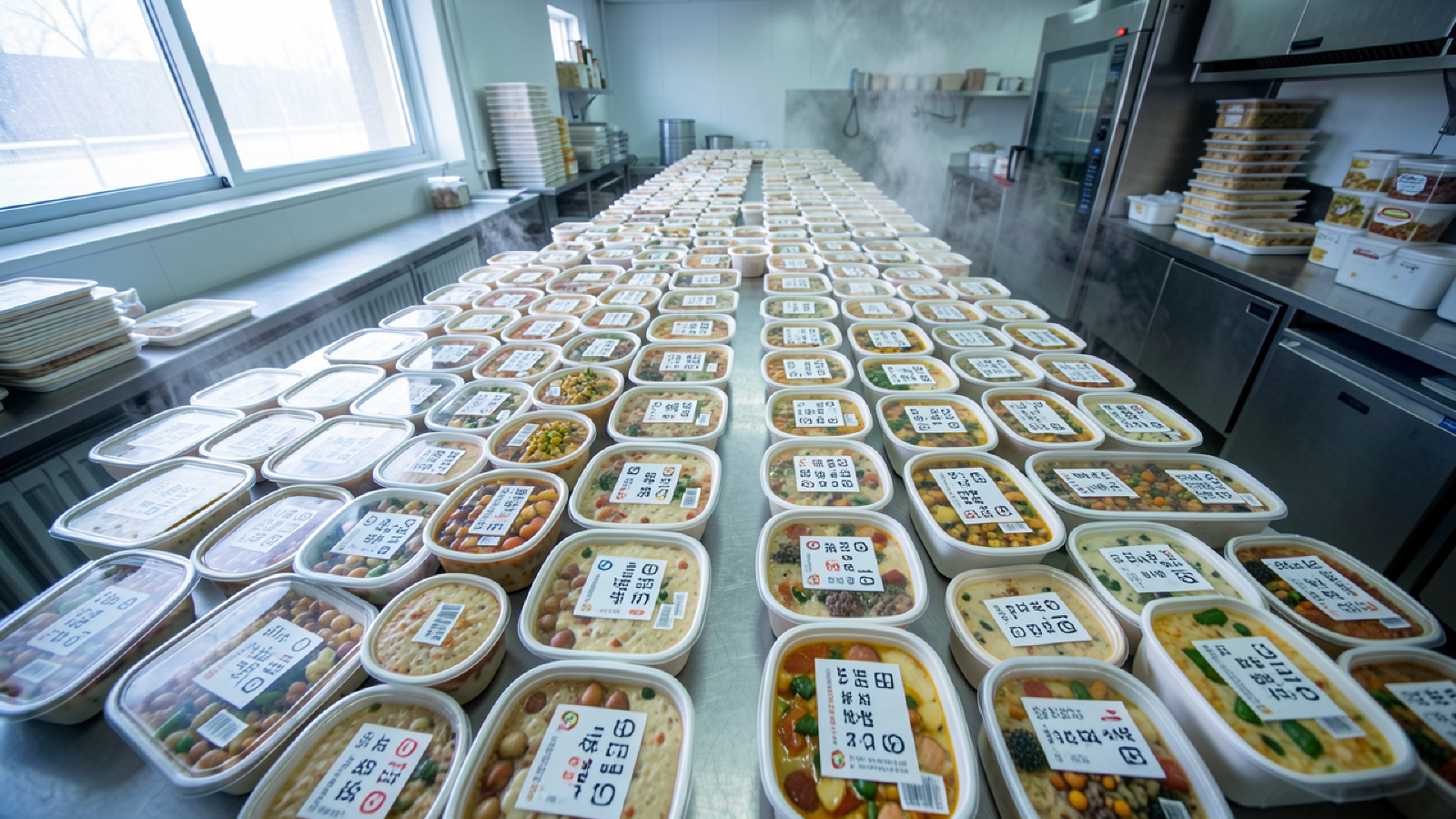
Carlos checks the production board at 5:30 AM and sees 340 meals scheduled for delivery by 1 PM. Forty-two are renal-restricted. Twenty-eight are cardiac (sodium under 1,500 mg per meal). Nineteen require pureed texture for dysphagia. Eleven are diabetic with carbohydrate counts printed on the label because the subscriber’s endocrinologist uses them in insulin dosing. Seven require halal preparation. Three require both renal restriction and pureed texture, a combination that eliminates most standard recipes and forces the production team into manual menu planning every week.
Carlos manages the kitchen for a medically tailored meal provider that the PE firm acquired fourteen months ago. Before the acquisition, the company served 180 meals per day from a single production facility to subscribers within a thirty-mile radius. Now it serves 340 across two facilities, with a third under construction, covering a sixty-mile delivery zone that crosses a state line. The dietary customization that worked at 180 meals per day through the original nutritionist’s personal knowledge of each subscriber does not scale to 340. The nutritionist cannot hold 340 dietary profiles in her head. She should not have to. But the PE firm’s solution so far has been a spreadsheet that the nutritionist updates weekly, a binder of printed dietary restriction summaries in the production area, and a color-coded label system that the new kitchen staff misread often enough that Carlos runs a manual quality check on every renal and cardiac meal before it leaves the line. That quality check adds thirty-five minutes to the morning production cycle that Carlos cannot afford and cannot skip.
The food-is-medicine vertical has the tightest operational-consumer connection where clinical consequences are immediate and measurable. Margaret has stage 3 chronic kidney disease. Her renal diet requires potassium below 2,000 mg and phosphorus below 800 mg per day. She takes warfarin for atrial fibrillation, which means her vitamin K intake must remain consistent (not eliminated, consistent) to avoid INR fluctuation. She prefers Japanese-influenced cuisine. And the cognitive concierge on the consumer side flagged mild dysphagia three months ago, confirmed by a swallow study ordered through the health concierge, which means her meals now require a modified texture that her previous meal plan did not account for.
All of this context flowed through the membrane. The kitchen prepared Margaret’s meal without Margaret explaining anything, without Carlos calling anyone, and without the nutritionist manually cross-referencing a medication list against a dietary restriction spreadsheet. The nutrition concierge on the consumer side maintains Margaret’s dietary profile. The operational system receives exactly what it needs: the restrictions, the interactions, the texture requirement, and the preference. Getting this wrong is not a customer satisfaction issue. A high-potassium meal for a renal patient risks hyperkalemia. A sudden vitamin K spike for a warfarin patient destabilizes anticoagulation. These are hospitalization risks that the kitchen’s accuracy prevents.
Dietary customization at scale is a supply chain and production planning challenge that compounds across hundreds of individualized meals. Perishable inventory operates on shorter cycles than any other supply chain the portfolio manages. Ingredient spoilage rates vary by item and season. Dietary constraints narrow the substitution window: when the standard recipe calls for spinach and the shipment arrives wilted, the kitchen cannot substitute kale for a renal patient because kale has higher potassium. The supply chain concierge manages vendor relationships, inventory forecasting, and substitution rules that are diet-specific, not just preference-specific. A substitution engine that knows the difference between “kale works as a swap for spinach in a cardiac meal” and “kale does not work as a swap for spinach in a renal meal” prevents the kind of error that Carlos currently catches by memory and instinct.
Production scheduling coordinates with delivery windows. Meals produced at 6 AM for a noon delivery require cold chain maintenance. Meals produced at 4 AM for an 8 AM delivery to a congregate meal site require different packaging, different temperature tracking, and different delivery vehicle configuration. The scheduling concierge balances kitchen production capacity against delivery route optimization, which the routing concierge handles with constraints the NEMT routing concierge does not face: temperature maintenance windows, batch production efficiency (thirty renal meals produced sequentially are more efficient than thirty renal meals interspersed with cardiac and diabetic meals), and delivery clustering that accounts for subscriber meal timing preferences. The batch-versus-individual balance is a daily optimization problem. Fully individualized production is accurate but slow. Full batch production is fast but generates waste when dietary profiles do not cluster neatly. The scheduling concierge learns the production line’s actual throughput per meal type and adjusts the batch composition to minimize both preparation time and dietary deviation.
The reimbursement environment for food-is-medicine is evolving faster than almost any other aging-services funding category. Medicare Advantage supplemental nutrition benefits expanded significantly in recent plan years, with plans competing on the richness of food and nutrition benefits as a subscriber acquisition tool. Medicaid HCBS waiver provisions increasingly include medically tailored meal coverage, though the covered populations, meal counts, and documentation requirements vary by state. USDA produce prescription programs create a third funding pathway. Some employer wellness benefits now include nutrition support for employees caring for aging parents. Each pathway has its own eligibility criteria, its own documentation format, its own renewal cadence, and its own audit risk profile. Carlos does not manage any of this. Neither does the nutritionist. The PE operating partner hired a billing coordinator who spends most of her time on the phone with MA plan representatives clarifying whether a specific subscriber’s benefit covers fourteen meals per week or ten.
The benefits and eligibility concierge navigates this per subscriber per program. Margaret qualifies for medically tailored meals under her MA plan’s supplemental nutrition benefit (fourteen meals per week, renewed quarterly with clinical documentation) and separately under her state’s Medicaid HCBS waiver (which covers an additional seven meals per week but requires different documentation, different outcome tracking, and different billing). The revenue cycle concierge manages billing across both pathways simultaneously for the same subscriber, ensuring that the MA plan is billed first (per coordination of benefits rules for dual-eligible subscribers) and the Medicaid waiver is billed for the incremental meals, with documentation formatted per each payer’s specifications. Across the portfolio, hundreds of subscribers have similarly layered benefit structures. Each one is a coordination-of-benefits puzzle that, solved incorrectly, produces either unbilled meals (revenue loss) or incorrect billing (audit risk and clawback exposure).
Clinical outcome tracking closes the loop between meal delivery and continued reimbursement. The quality concierge tracks the evidence that justifies ongoing funding. For renal subscribers: potassium and phosphorus labs trending within target ranges. For diabetic subscribers: A1C trajectory. For heart failure subscribers: weight stability and sodium-fluid correlation. This data flows from the consumer health concierge through the membrane. Margaret’s quarterly labs show her potassium has remained between 3.8 and 4.6 mEq/L since she started the renal meal program. That data point, documented in the format her MA plan requires, supports the quarterly reimbursement renewal without the provider’s care team assembling it manually. The outcome data also strengthens the portfolio’s negotiating position with MA plans: demonstrable clinical improvement across a subscriber population supports higher reimbursement rates and expanded coverage terms at contract renewal.
The consumer connection in food-is-medicine operates continuously, not episodically. The nutrition concierge manages Margaret’s dietary profile, including medication-food interaction monitoring that updates when her prescriptions change. When her cardiologist adds a new medication next month, the consumer platform updates the interaction profile, and the operational system adjusts her meal plan before the next production cycle without Margaret calling anyone. Meal timing coordinates with her medication schedule (the warfarin is taken with dinner; consistent vitamin K at dinner matters more than at lunch). Delivery preferences reflect her daily routine (morning deliveries accepted Monday through Thursday; Friday delivery must arrive before 10 AM because her daughter visits Friday afternoons).
This continuous connection contrasts sharply with the episodic model that most meal providers operate. In the standard model, a dietitian conducts an intake assessment, creates a static meal plan, and updates it quarterly or when the subscriber reports a change. Between updates, the plan drifts. Margaret’s new dysphagia diagnosis would have waited for the next quarterly review in the standard model. Through the membrane, the texture modification entered the production system within forty-eight hours of the confirmed diagnosis. The operational system handles production, delivery, reimbursement, and clinical documentation. Together through the membrane, they deliver what neither could produce independently: a clinically accurate, personally tailored, properly reimbursed meal program that Margaret experiences as meals she enjoys.
Portfolio intelligence across acquired food-is-medicine operators surfaces patterns that improve the entire operation. Dietary customization efficiency (which kitchen handles renal-plus-dysphagia combinations most effectively), delivery route cost per meal, ingredient cost benchmarking across vendors and facilities, clinical outcome comparison across subscriber populations, payer mix analysis (which MA plans reimburse most reliably, which Medicaid waivers have the most onerous documentation requirements), and subscriber retention rates all emerge at portfolio scale. The kitchen manager who lost subscribers because deliveries arrived cold does not know that the other facility solved the same problem with insulated tote bags and reorganized vehicle loading. Portfolio intelligence makes that connection visible. Carlos knows his kitchen. Portfolio intelligence shows him what other kitchens have learned.
Food safety compliance adds a regulatory layer that intensifies at scale. USDA, state health department, and local inspection requirements apply differently depending on production volume, delivery geography (crossing a state line invokes the receiving state’s food safety regulations in addition to the production state’s), and whether the operation serves congregate meal sites (which carry their own licensing and inspection requirements). The compliance concierge tracks inspection schedules, certification renewals, temperature logging compliance, and incident response protocols across the portfolio. An E. coli incident at one facility creates audit exposure across the portfolio if the PE firm has centralized procurement, because inspectors will ask whether the contaminated ingredient entered other facilities through the same vendor. The compliance concierge traces the supply chain back to the source and forward to every facility that received the ingredient, before the inspector asks.
The honest constraint mirrors NEMT: the consumer connection depends on subscriber density. A food-is-medicine provider serving 1,000 subscribers and only forty of them use the consumer platform has a limited membrane-enabled intelligence advantage. The operational value of the concierge architecture (production planning, supply chain, routing, reimbursement, compliance) delivers independent of consumer platform density. The consumer connection amplifies that value as density grows. There is also a payer evolution risk: MA supplemental nutrition benefits are expanding now, but plan benefit design changes annually, and a plan that covers fourteen meals per week this year may cover ten next year. The portfolio’s clinical outcome data is the strongest hedge against benefit retrenchment, because it demonstrates cost avoidance (hospitalizations prevented) that payers value more than the benefit cost.
Cross-References#
The Benefits and Eligibility Concierge (BOI-01.05). Nutrition benefit eligibility determination across MA supplemental, Medicaid HCBS, and USDA produce prescription programs.
The Routing and Logistics Concierge (BOI-01.07). Meal delivery logistics with temperature maintenance constraints, batch production coordination, and delivery window optimization.
The Supply Chain Concierge (BOI-01.08). Perishable inventory management with diet-specific substitution rules and seasonal sourcing constraints.
The Nutrition Concierge (BMT-01.10). The consumer side of the food-is-medicine connection: dietary profile management, medication-food interaction monitoring, and meal preference coordination through the membrane.
The Health Concierge (BMT-01.02). Clinical outcome data that flows through the membrane to support reimbursement documentation and dietary adjustment.
Technical Appendix BOI-04.02-A is available to partners and investors at partners.bluemirror.tech.